

Can Packet Loss Affect Voice Call Quality?
A voice call can sound acceptable one moment and become clipped, robotic, or one-sided the next. For network teams supporting VoIP, UC, contact centers, and Wi-Fi calling, the question is not merely can packet loss affect voice - it is how much loss is occurring, where it starts, and whether the network can recover before users notice.
Voice traffic is unusually sensitive because it is real-time traffic. A file transfer can request missing data again. A live conversation cannot wait for a retransmission without creating an awkward pause. When a voice packet is lost, the receiver must either conceal the missing audio or move on. Both options can reduce call quality.
Can packet loss affect voice calls? Yes, and quickly
Most voice platforms use the Real-time Transport Protocol (RTP) over UDP. UDP prioritizes timely delivery over guaranteed delivery, which is appropriate for live media but leaves no automatic recovery mechanism for a lost packet. If the receiving endpoint does not receive a packet before its jitter buffer is played out, that slice of audio is gone.
Modern codecs and endpoints use packet loss concealment to soften the impact. They may repeat a small portion of prior audio, interpolate sound, or use forward error correction where supported. These techniques can make isolated loss difficult to hear. They cannot fully protect a call when loss is sustained, bursty, or combined with high jitter.
The result is familiar to users: words disappear, voices sound metallic, syllables break apart, or callers talk over one another because audio arrives inconsistently. Severe loss can trigger call drops, one-way audio, or a codec renegotiation that lowers quality to keep the session active.
Packet loss also affects each direction independently. A user may hear a remote caller clearly while the remote caller hears choppy audio in return. That distinction matters during troubleshooting. A single end-user report does not prove that the entire call path is impaired.
How much packet loss is too much for voice?
There is no universal threshold that guarantees a good or bad call. Codec selection, packetization interval, jitter-buffer behavior, call volume, and user expectations all influence the outcome. Still, practical operating targets help network teams set meaningful alerting and acceptance criteria.
For high-quality voice, packet loss should generally remain below 1 percent. Between 1 and 3 percent, users may notice occasional degradation, especially during active conversation. Loss above 3 percent is likely to be audible, and sustained loss above 5 percent can make a call difficult to use. Burst loss deserves particular attention because several consecutive missing packets are harder for concealment algorithms to mask than the same number of packets spread evenly over time.
Packet size and packet frequency also matter. A codec sending one packet every 20 milliseconds creates 50 packets per second. Losing one packet removes 20 milliseconds of audio. If a network issue drops five packets in a row, the listener may lose 100 milliseconds of speech, enough to make a word or an important consonant unclear.
Mean Opinion Score (MOS) can provide a useful user-oriented measure, but it should not replace packet-level analysis. A good MOS score averaged over a call can hide short periods of serious impairment. Examine loss, jitter, latency, codec changes, and call events together.
Packet loss is not the only voice-quality problem
Packet loss often receives the blame because it is easy to measure, but poor voice quality can result from several related conditions. Latency creates conversational delay. Jitter changes packet arrival times and can cause the jitter buffer to underflow. Insufficient bandwidth or queue congestion can create all three conditions at once.
It is also possible to have low overall packet loss and still have poor calls. A short, recurring microburst on an uplink may only affect a small percentage of packets over a five-minute average, while creating noticeable audio gaps during every burst. Likewise, a wireless client with fluctuating signal quality may experience retries, roaming delays, or contention that are not visible from a simple wired-interface counter.
The practical objective is not only to identify a percentage. It is to determine whether loss aligns with user complaints, which traffic is affected, and where along the path the impairment begins.
Common sources of voice packet loss
Loss can originate in the access layer, the LAN, the WAN, the internet edge, or the endpoint itself. The following fault domains are especially common in business environments:
Wi-Fi coverage and capacity: Weak signal, co-channel interference, high channel utilization, excessive retries, and poorly timed roaming can interrupt real-time traffic. Voice clients need consistent RF performance, not simply the ability to stay connected.
Congested interfaces and queues: Oversubscribed uplinks, WAN circuits, firewall interfaces, and internet connections can drop packets when queues fill. Voice may be affected first when QoS policies are missing, misclassified, or not honored across a service-provider boundary.
Physical-layer faults: Damaged copper, marginal transceivers, fiber contamination, duplex mismatches, and interface errors can discard frames before voice software has any opportunity to compensate.
Endpoint and platform issues: A busy softphone host, outdated NIC or Wi-Fi drivers, headset problems, overloaded session border controllers, and inconsistent codec settings can resemble network loss or create it locally.
A wired versus wireless comparison is often revealing. If calls are clean from a wired workstation but degrade on the same application over Wi-Fi, investigate RF design, client behavior, and wireless QoS before focusing on the WAN. If users in multiple sites experience impairment at the same time, shared WAN, internet, cloud, or voice-platform dependencies become more likely.
Validate the problem from the call to the cable
Effective troubleshooting starts with evidence from the affected call. Collect the call time, source and destination, device type, connection type, codec, and user symptoms. A report that says "calls were bad this morning" is hard to correlate. A report showing that a particular softphone experienced 4 percent inbound RTP loss from 10:14 to 10:22 provides a usable starting point.
Next, review voice-platform call-quality records. Separate inbound from outbound loss, and look for jitter, round-trip time, codec changes, concealment events, and retransmissions where applicable. Check whether the issue follows a user, a location, a VLAN, a WAN path, or a specific application tenant.
Network monitoring and packet visibility tools can then correlate the call event with interface utilization, dropped packets, errors, queue statistics, flow records, and path behavior. Flow-level visibility is valuable for identifying which conversations consumed bandwidth, while packet capture can confirm RTP sequence gaps, DSCP markings, fragmentation, and signaling behavior. Use capture points carefully: a clean capture at one location does not prove the far end of the path is clean.
For wireless voice, validate the RF environment with the same discipline used for any business-critical WLAN. Review signal strength, signal-to-noise ratio, retry rates, channel utilization, roaming performance, access point density, and client distribution. A predictive design is helpful, but an active survey and validation process show what users actually experience in the building.
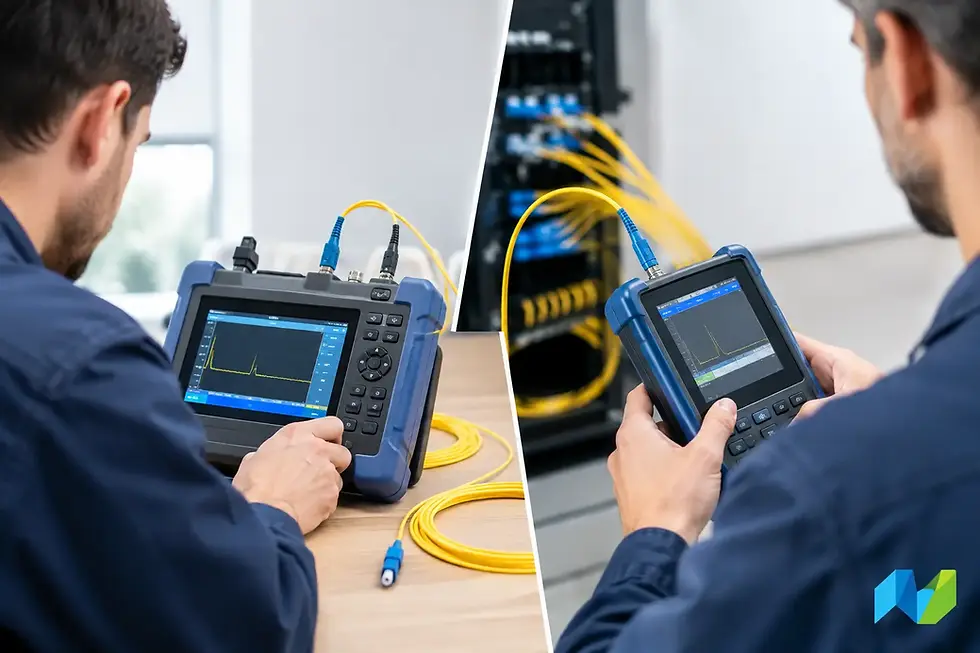
Do not overlook the physical layer. Certification and targeted testing of suspect copper or fiber links can expose errors that dashboard metrics only hint at. Interface counters should be reviewed over the same time window as the failed calls, not only after the condition has cleared.
Correct the cause without creating a new bottleneck
The right remediation depends on the source of loss. For congestion, validate capacity and shape lower-priority traffic so that properly marked voice packets receive preferential treatment during contention. QoS is not a substitute for bandwidth, but it prevents bulk transfers and noncritical traffic from competing equally with live audio.
For wireless environments, improve coverage and capacity based on measured requirements, not access point count alone. Channel plans, transmit power, band steering, roaming settings, and voice-specific WLAN policies should support the devices and applications in use. Changes that improve one client type can harm another, so verify results with representative endpoints.
For physical faults, replace or repair the affected cable, optic, transceiver, or interface and confirm the link meets the required standard. For endpoint issues, update drivers and software, review CPU and Wi-Fi adapter power settings, and compare performance across known-good devices.
After changes, test under realistic load and measure the same call-quality indicators that exposed the issue. This closes the loop between a technical modification and the user experience it was meant to improve.
Voice quality is a business service outcome, not just an RTP statistic. A disciplined combination of call analytics, network visibility, Wi-Fi validation, and physical-layer testing gives teams the evidence to act with confidence. Advanced Network Devices Inc. helps organizations select and apply those capabilities so voice problems can be isolated before they become a recurring operational complaint.


Comments