

Network Segmentation Implementation Guide
A flat network rarely fails in an obvious way. More often, a compromised endpoint, misconfigured device, or unauthorized connection gains access to systems it was never intended to reach. A disciplined network segmentation implementation guide gives IT teams a practical way to limit that exposure while preserving the performance and access users, applications, and operations depend on.
Segmentation is not simply a VLAN project. VLANs are useful building blocks, but meaningful segmentation also requires policy, enforcement, visibility, validation, and a process for maintaining the design as the environment changes. For organizations supporting multiple sites, wireless clients, IoT devices, operational technology, and cloud-connected services, that distinction matters.
Define What Segmentation Must Accomplish
The first question is not how many segments to create. It is what business and operational risks the design must address. A hospital may need to isolate clinical devices from guest traffic and administrative systems. A manufacturer may need to separate production equipment from corporate IT while allowing a limited set of approved services. A professional services firm may focus on containing user endpoints and protecting sensitive data repositories.
Start by identifying the systems that require stronger controls, the systems that cannot tolerate interruption, and the traffic flows that are necessary for the business to operate. This produces a segmentation strategy based on actual requirements instead of a generic network diagram.
There is a trade-off. Too few segments leave unnecessary paths open for lateral movement. Too many poorly defined segments can increase operational overhead, complicate troubleshooting, and create exceptions that weaken the policy. The right level of granularity depends on the organization’s risk profile, scale, regulatory obligations, and ability to operate the environment over time.
Network Segmentation Implementation Guide: Begin With Discovery
Discovery is where most successful projects earn their value. Before changing routing, firewall rules, switch configurations, or wireless policies, establish an accurate view of connected assets and normal traffic patterns.
Build an Asset and Dependency Inventory
Inventory should go beyond IP addresses and hostnames. Classify assets by owner, function, location, operating system, criticality, and support status. Include systems that are often overlooked: printers, cameras, badge readers, wireless access points, building controls, lab equipment, VoIP devices, backup appliances, and vendor-managed systems.
Then identify dependencies. A point-of-sale terminal may require a payment processor, DNS, DHCP, NTP, software updates, and remote support access. A server may communicate with identity services, storage, backup, monitoring, and application tiers. Blocking one overlooked dependency can turn an otherwise sound segmentation rollout into an outage.
Network flow monitoring and packet-level visibility are particularly useful at this stage. They help teams distinguish a required application flow from legacy traffic that no one owns, or from suspicious communication that should not continue. Platforms such as LiveAction and NetCrunch can support the operational visibility needed to understand baseline behavior before and after policy changes.
Identify the Real Enforcement Points
Segmentation can be enforced at several layers: access switches, routing boundaries, next-generation firewalls, wireless controllers, network access control systems, host firewalls, and cloud security controls. Each has different strengths.
Access-layer controls can limit exposure close to the endpoint. Firewalls provide detailed policy inspection between sensitive zones. Wireless policies can place employee, guest, contractor, and device traffic into separate access categories. Host-based controls may protect workloads when traffic does not traverse a traditional network boundary.
Do not assume that a firewall between VLANs solves every problem. East-west traffic may remain local to a switch, wireless clients may use different forwarding behavior, and cloud workloads may communicate outside the paths visible to on-premises controls. Validate where traffic actually travels before deciding where policy should be applied.
Create Zones Based on Function and Risk
A zone is a grouping of systems with similar access requirements, not merely a convenient subnet. Good zone definitions make policy easier to understand, audit, and maintain.
Many organizations begin with a practical set of functional zones:
User endpoints for managed employee devices
Privileged administration systems for IT and security personnel
Server and application workloads
Guest and contractor access
IoT, facilities, voice, and other constrained devices
Network management infrastructure
These categories are a starting point, not a universal blueprint. A high-security environment may separate development, test, production, payment, and regulated data systems. A smaller organization may gain meaningful risk reduction by separating users, servers, guest wireless, and unmanaged devices before pursuing more granular controls.
For each zone, document three decisions: what traffic may enter, what traffic may leave, and who approves exceptions. Default-deny policies are often the long-term objective, but introducing them without complete traffic knowledge can disrupt operations. In many environments, a monitored allowlist approach is a safer transition path.
Design Policies Around Required Flows
Policies should describe an intent that an engineer, auditor, and application owner can all understand. “Allow application server access to database service on TCP 1433” is actionable. “Allow internal traffic” is not.
Use source, destination, protocol, port, direction, and business owner where possible. Include DNS, DHCP, NTP, identity services, certificate services, monitoring, backup, and patching dependencies. These foundational services are frequently responsible for failed segmentation projects because their reach is broader than expected.
Administrative access deserves separate treatment. Management protocols such as SSH, RDP, HTTPS administration, SNMP, and device console access should originate from controlled management networks or privileged access systems, not from any user endpoint. This reduces the number of paths available to an attacker and makes legitimate administration easier to monitor.
Wireless requires equal attention. A well-designed wired segmentation plan can be weakened if corporate, guest, and device SSIDs map to permissive policies. Wireless survey and design data can also help confirm that coverage and roaming requirements are not driving users toward unauthorized access points or unmanaged connectivity workarounds.
Implement in Controlled Phases
Avoid a network-wide cutover unless the environment is unusually simple and thoroughly tested. Phased deployment lowers risk and improves the quality of the final policy.
Begin with a pilot group that represents real conditions but has a manageable blast radius. A single department, application environment, branch office, or device class can reveal undocumented dependencies without affecting the entire organization. Capture baseline performance before the change, apply policies in monitoring or alert-only mode where supported, and review denied flows with the relevant application and infrastructure owners.
Change control remains essential. Record the reason for each rule, its owner, its review date, and the systems it supports. Temporary exceptions should expire automatically or be reviewed on a fixed schedule. Otherwise, short-term workarounds become permanent gaps in the architecture.
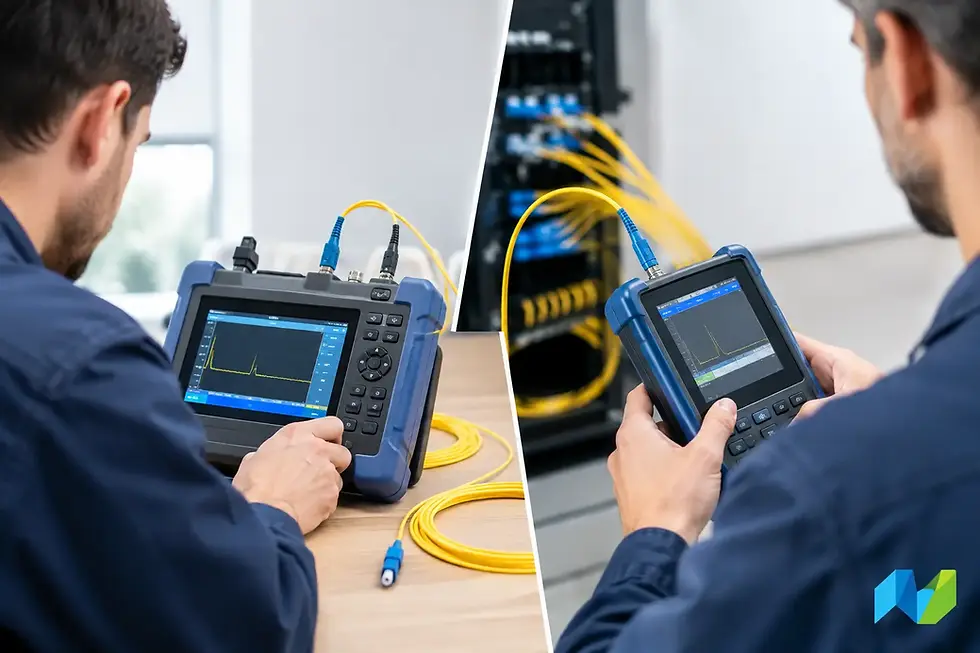
Physical infrastructure should not be ignored during implementation. Incorrect switchport labeling, undocumented fiber paths, cabling faults, and speed or duplex issues can complicate rollout diagnostics. Copper and fiber validation tools help separate a policy problem from an underlying infrastructure issue, saving time when a newly segmented device appears unreachable or unstable.
Validate Security, Performance, and Operations
A segmentation policy is not complete when the firewall rule is committed. Validation must confirm that approved flows work, prohibited flows fail, and performance remains acceptable.
Test from each relevant zone, not just from an administrator workstation. Verify name resolution, authentication, application transactions, printing, voice calls, software updates, monitoring alerts, and remote support workflows as applicable. Test both normal use and failure conditions. For example, confirm that a user can reach an approved application while being unable to connect directly to its database or management interface.
Review logs and flow records after deployment. Repeated denied traffic may indicate a missed dependency, but it may also expose an outdated application, shadow IT, or an attempted lateral movement path. Treat those findings as operational intelligence, not merely tickets to clear.
Performance testing matters most for latency-sensitive services. Voice, video, wireless roaming, real-time control systems, and large-scale authentication can be affected by added inspection or suboptimal routing paths. Measure latency, loss, jitter, throughput, and application response time against the baseline. If performance declines, determine whether the issue is policy inspection, oversubscribed links, asymmetric routing, DNS delays, or another infrastructure constraint.
Keep Segmentation Current
Segmentation is an operating discipline. New SaaS platforms, mergers, application changes, remote access methods, and connected devices continuously alter the traffic profile. Policies that were accurate six months ago may now be too broad, too restrictive, or no longer tied to an active business service.
Establish a review cadence for rules, zone membership, privileged access paths, and exceptions. Integrate segmentation requirements into procurement and change-management processes so that new devices and applications arrive with documented connectivity needs. Continuous monitoring provides the evidence needed to refine the design without relying on assumptions.
The most effective segmentation programs make secure connectivity easier to manage, not harder to explain. When teams can see traffic clearly, validate infrastructure confidently, and apply policies in measured phases, segmentation becomes a practical foundation for reliable network operations and long-term risk reduction.


Comments