
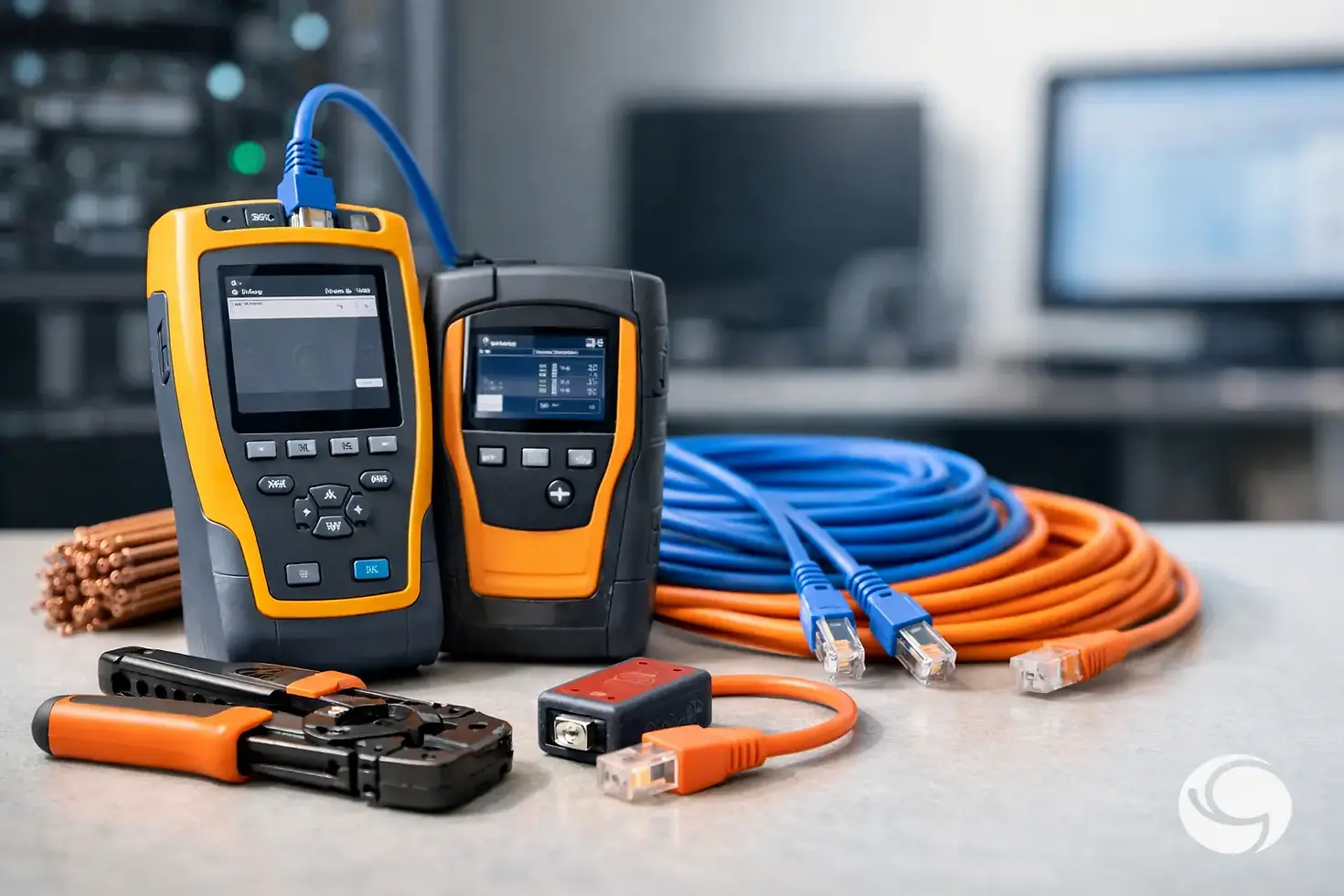
Choosing Copper Cable Certification Tools
A cable run can look perfect on a floor plan and still fail where it matters - under certification. That is why copper cable certification tools are not a niche purchase for structured cabling teams, enterprise IT, or integrators. They are the difference between assuming a link is ready and proving it meets the standard, with test data you can stand behind during turnover, remediation, and future troubleshooting.
For organizations building or upgrading copper infrastructure, the tool choice affects more than pass or fail results. It shapes technician efficiency, reporting quality, retest rates, and how quickly a project can move from installation to acceptance. In practice, the right tester helps reduce callbacks, defend workmanship, and give network teams confidence that the physical layer will support the applications riding on it.
What copper cable certification tools actually do
Not every cable tester is a certification tester. That distinction matters. Basic continuity or qualification tools can confirm wiremap, identify open pairs, or estimate whether a link may support a certain speed. Certification tools go much further. They measure performance against recognized cabling standards and determine whether a permanent link or channel passes the required category and class limits.
That includes parameters such as insertion loss, NEXT, return loss, propagation delay, delay skew, and other metrics that directly affect signal integrity. For a contractor, consultant, or internal infrastructure team, certification creates documented proof that the installed cabling meets the specified performance level, whether the target is Category 6A for new enterprise deployments or another standard required by the project.
This is also where costly confusion can start. Many teams buy a tester thinking any advanced handheld unit will cover certification, then discover it only supports qualification. If your deliverable includes standards-based acceptance testing and formal reports, certification capability is the baseline requirement, not an upgrade you can work around later.
Why tool selection affects project outcomes
On paper, two certification platforms may appear similar because both support copper testing and generate reports. In the field, the differences are more practical. Test speed, ease of use, adapter quality, battery life, cloud or desktop reporting workflow, and standards library updates all influence how productive your team will be over the life of the tool.
A slower workflow may not seem significant when evaluating a single demo unit. Across hundreds or thousands of drops, it becomes significant very quickly. A few extra seconds per test, awkward result management, or inconsistent adapters can add hours to a project and increase the likelihood of operator error.
There is also the issue of credibility. If your customers, consultants, or compliance stakeholders expect certified results from recognized platforms, your reporting process needs to be defensible. The best buying decision is not always the least expensive tester. It is the platform that fits your volume, certification requirements, technician skill level, and reporting obligations with the fewest compromises.
How to evaluate copper cable certification tools
The first question is simple: what standards and cable categories do you need to certify today, and what will you need to support over the next few years? If your work is centered on Category 5e or Category 6, one class of tester may be enough. If you are supporting higher-performance enterprise builds, PoE-heavy environments, or Category 6A rollouts, you need a platform aligned with that reality.
The second question is about test limits and frequency range. A tool may be marketed broadly for copper testing, but the details determine whether it supports the certifications you actually need. Buying too low can force early replacement. Buying too high can also be inefficient if the premium does not serve your project mix. This is one of those areas where it depends on your install base, bid requirements, and customer expectations.
Ease of operation is just as important as technical range. Experienced technicians can work around clunky menus and extra setup steps, but that does not make those issues harmless. Consistent field performance depends on repeatable workflows. Clear test setup, visible pass or fail indicators, fast autotest execution, and intuitive fault diagnosis reduce mistakes and training overhead.
Reporting deserves close scrutiny. A certification result is only useful if it can be reviewed, exported, organized, and delivered in a format stakeholders accept. Some teams need polished closeout packages for clients. Others need searchable records for internal lifecycle management. If the reporting environment is cumbersome, the hidden administrative cost can become as frustrating as the field testing itself.
Features that matter beyond the spec sheet
Accuracy and standards compliance come first, but day-to-day usability is where long-term value appears. Diagnostic guidance is one example. When a link fails, a tester that helps identify likely causes such as split pairs, excessive untwist, connector issues, or alien crosstalk exposure can shorten remediation time substantially.
Adapter ecosystem is another factor that often gets overlooked during procurement. Permanent link adapters, channel adapters, replacement heads, calibration requirements, and service turnaround all affect ownership cost. A strong platform is not just the handheld unit. It is the broader testing system and support model around it.
PoE validation can also be relevant, especially in environments supporting high-density wireless, surveillance, access control, and smart building systems. Certification and PoE testing are not identical functions, but many buyers now want a broader copper validation workflow. If your field teams are expected to certify cabling and confirm readiness for powered devices, it makes sense to evaluate how well the tool portfolio supports both tasks.
For organizations managing multiple technicians or regions, result synchronization and project management are increasingly important. Centralized visibility into test outcomes helps standardize work quality, simplify audits, and reduce the lag between field completion and report delivery. In larger deployments, that operational efficiency can be just as valuable as the tester's core measurement performance.
Common buying mistakes
One of the most common mistakes is treating copper cable certification tools as interchangeable commodities. They are not. Small differences in workflow, diagnostics, reporting, and support can have an outsized impact once the tools are in daily use.
Another mistake is buying only for the current bid. That may control short-term cost, but it can create long-term limitations if your business expands into higher-category projects or more demanding documentation requirements. The opposite mistake is overbuying based on theoretical future needs that may never materialize. Good planning requires a realistic view of your market, customers, and service roadmap.
Support should not be an afterthought. Certification tools are precision instruments. Teams need onboarding, software guidance, firmware updates, calibration planning, and sometimes help interpreting test behavior in complex environments. A product backed by knowledgeable presales and after-sales support is often a better business decision than a lower-priced option that leaves your team to sort out field issues alone.
Where certification fits in a broader network strategy
Copper certification should not be isolated from the rest of network assurance. A passing cable plant supports switching, wireless, voice, video, and endpoint performance, but it does not guarantee those layers are configured correctly. At the same time, unresolved physical layer issues can waste hours of troubleshooting at higher layers.
That is why many IT leaders now view certification as part of an end-to-end validation model. New builds, expansions, renovations, and refresh projects all benefit when the copper layer is documented properly from day one. It improves acceptance testing, supports warranty and compliance requirements, and creates a cleaner baseline for future troubleshooting.
For enterprises, healthcare environments, education campuses, industrial sites, and public sector facilities, that baseline is especially valuable. These are not static networks. They evolve constantly, with more connected devices, more power demands, and tighter expectations around uptime. Certification data helps reduce uncertainty when changes occur.
Making the right decision for your environment
The best choice comes from matching the tool to the operational reality. A contractor focused on high-volume commercial installs may prioritize speed, report packaging, and multi-tech consistency. An enterprise infrastructure team may care more about selective validation, long-term record keeping, and integration with broader network assurance practices. A systems integrator may need flexibility across varied project types and customer standards.
This is where consultative evaluation matters. Looking at specifications alone rarely tells the full story. It helps to compare real workflows, test requirements, service expectations, and the level of guidance available after purchase. Advanced Network Devices works with organizations that need more than a catalog decision - they need a solution that fits the way their teams actually validate infrastructure.
When copper cabling is expected to support critical applications, certification is not just a checkbox. It is a quality control process, a risk reduction step, and a source of proof that the foundation of the network is sound. Choose the tool with that standard in mind, and it will keep paying for itself long after the installation is complete.


Comments